

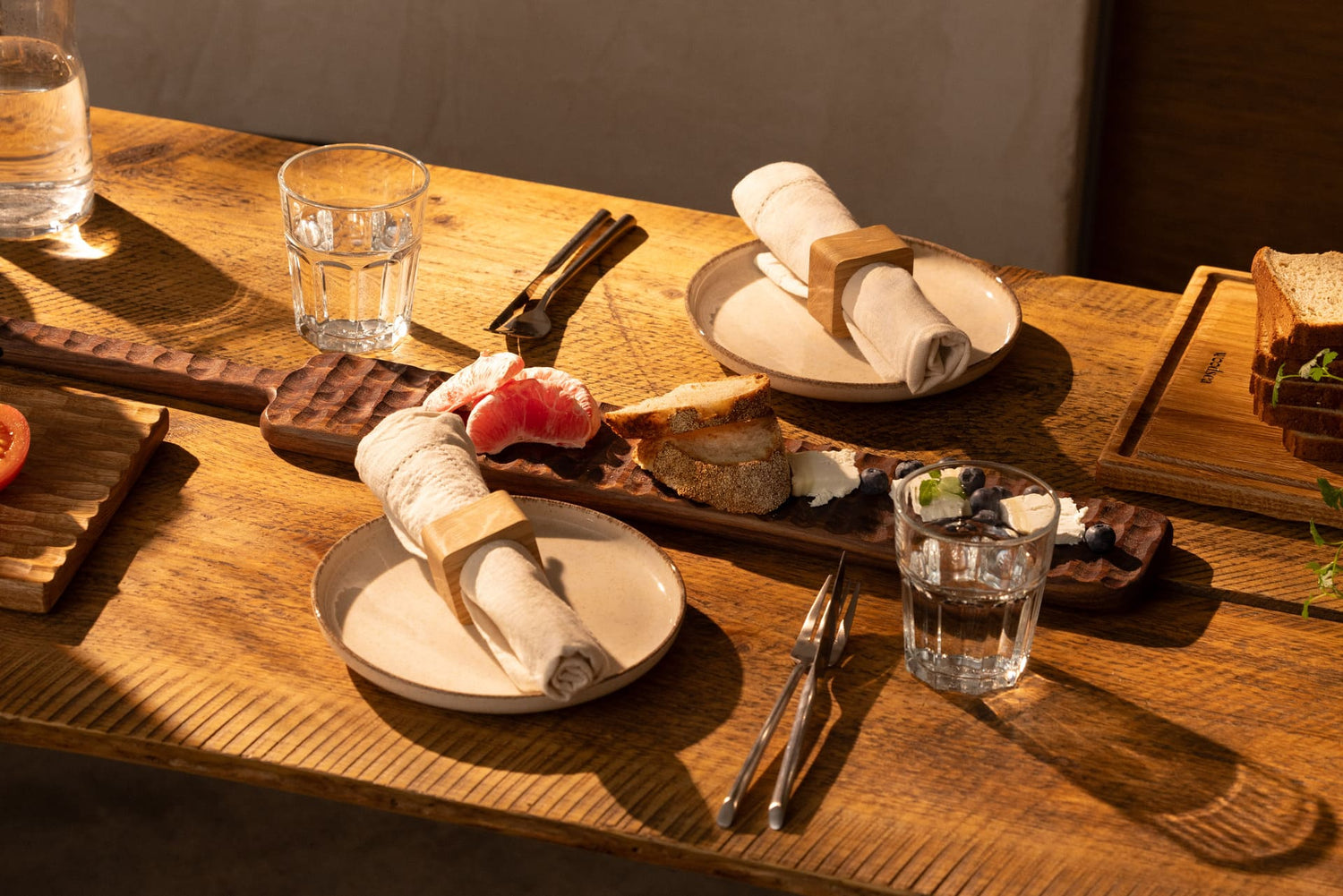
At woodsea.studio, your cutting boards, serving board or any other kitchen tool are handcrafted from premium wood—designed to be the centerpiece of your culinary rituals. To ensure these pieces age gracefully and retain their stunning natural beauty, a few simple care steps are necessary.
Follow these rules closely, and your wooden kitchen tools will only grow richer in character and beauty over time.
Essential Rules for Board Longevity
These rules are critical for maintaining the health, hygiene, and look of your natural wood boards:
-
Hand Wash Only – No Dishwashers! The harsh detergents, high heat, and extreme moisture of a dishwasher will cause instant warping, cracking, and dulling. This is the fastest way to ruin a wood board.
-
Avoid Soaking: Never soak or submerge your board in water. Prolonged water exposure causes the wood fibers to swell and split.
-
Wash Gently and Dry Immediately: After use, wash quickly with mild soap and warm water. Rinse thoroughly, and then dry the board immediately with a clean towel.
-
Air Dry Evenly: After towel drying, allow the board to air dry completely. Always stand it on its edge to ensure air circulates on all sides, preventing uneven drying and warping.
-
Avoid Extreme Heat: Do not put hot plates, pots, or pans directly on the board. Extreme heat can scorch the wood and cause deep cracking.
-
Avoid Direct Sunlight: Do not store your board where it will receive intense, prolonged, direct sunlight (like near a sunny window). This can lead to uneven drying and fading.
-
Indoor Use Only: Your boards are finished for indoor, culinary use only and should not be exposed to outdoor elements.
-
Remove Stains and Odors Naturally: For tough stains or strong odors, sprinkle coarse salt on the damp board and scrub with half a lemon or a splash of vinegar. Rinse quickly and dry immediately.
Conditioning: The Key to Lifelong Beauty
Regular oiling is the most important step for the longevity of your board. Conditioning prevents the wood from drying out, cracking, and helps repel moisture and food particles.
-
Regularly Oil with Food Grade Mineral Oil: Use a generous amount of a food-grade mineral oil, butcher block oil, or a specialized board cream. Crucially, avoid cooking oils (like olive or vegetable oil), as they will go rancid and make your board smell.
-
When to Oil: Aim to oil your board monthly, or whenever it starts to look dry and faded.
-
How to Apply: Ensure the board is clean and completely dry. Rub the oil into all surfaces (including the sides) using a clean cloth. Let the oil soak in for several hours, then wipe off any excess.
With these simple steps, your woodsea.studio kitchen tools will remain a beautiful, durable, and functional piece for countless meals to come!