

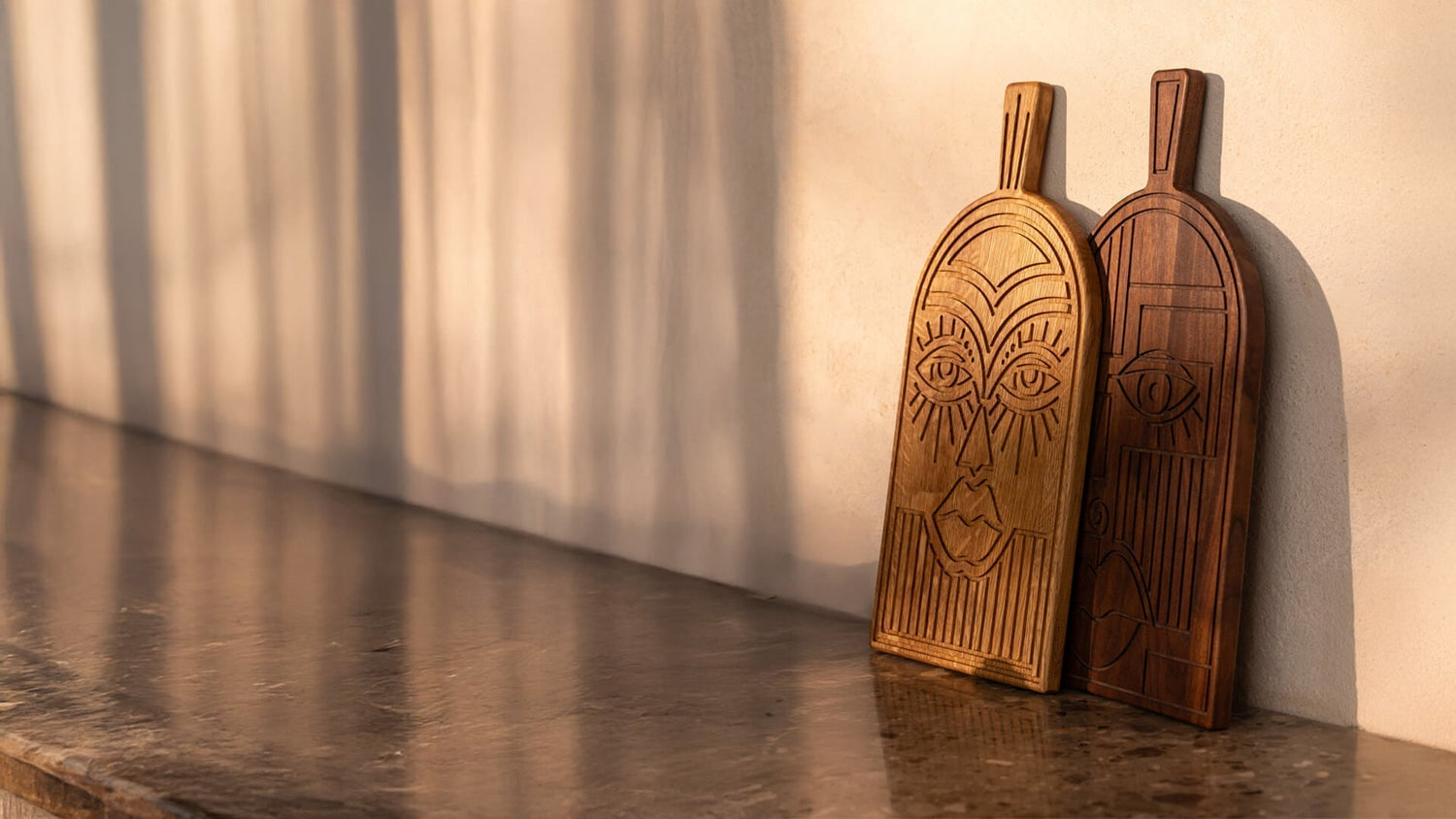
At woodsea.studio, we are deeply connected to the natural materials we use. When you choose one of our handcrafted cutting boards, you are not just investing in a timeless kitchen tool—you are making one of the most significant and simple sustainable choices for your home.
In an era dominated by plastic convenience, we often forget that the best solutions are the ones nature provides. Here is a look at why your wooden board is, unequivocally, one of the most environmentally responsible products in your kitchen.
1. Renewable & Carbon Capturing: The Natural Cycle
Unlike plastic, which is derived from non-renewable fossil fuels and requires energy-intensive chemical processes, our wooden boards are born from a renewable resource.
-
Carbon Storage: As a tree grows, it absorbs and stores atmospheric carbon dioxide. When the wood is used to create a durable product like your cutting board, that carbon remains sequestered, keeping it out of the atmosphere. Your board is, essentially, a small carbon sink!
-
Responsible Sourcing: We focus on hardwoods like Oak, Walnut, and Ash that, when sourced responsibly, support sustainable forestry practices where trees are managed and replanted for future generations.
2. Longevity Outperforms Convenience
The true measure of sustainability is a product's lifespan. While a cheap plastic board might seem convenient, its short life and eventual disposal create significant waste.
-
Designed for Decades: A woodsea.studio board, with proper care and regular oiling, is built to last not just years, but decades. We covered this in our care guide: with simple maintenance, your board will develop a beautiful patina instead of wearing out.
-
The Power of Restoration: Deeply grooved plastic must be discarded because the cuts harbor bacteria. Conversely, a wooden board can be sanded down and refinished, essentially hitting a "reset button" to restore its safe, smooth surface.
3. The Microplastics Factor
One of the most alarming environmental and health drawbacks of plastic boards is the issue of microplastics.
-
Plastic Contamination: Every slice of your knife on a plastic board shaves off tiny, almost invisible plastic fragments. Studies indicate these microplastics can contaminate your food.
-
A Natural Alternative: Choosing wood eliminates this risk entirely. When you cut on a wood surface, the fibers are gently separated, ensuring the food you prepare remains clean and natural.
4. Biodegradable & Circular Economy
At the very end of its long life—likely many years from now—your wooden board will naturally return to the earth.
-
End-of-Life: Wood is completely biodegradable and can be composted or repurposed, leaving no lasting environmental footprint.
-
Landfill Bound: Plastic boards, due to contamination and material type, are rarely recyclable. They mostly end up in landfills where they take centuries to break down, contributing to pollution.
Choosing a woodsea.studio board is choosing a product that is kinder to your knives, safer for your food, and deeply respectful of the planet. It’s a choice that reflects a commitment to quality, health, and a more circular, natural way of living.