

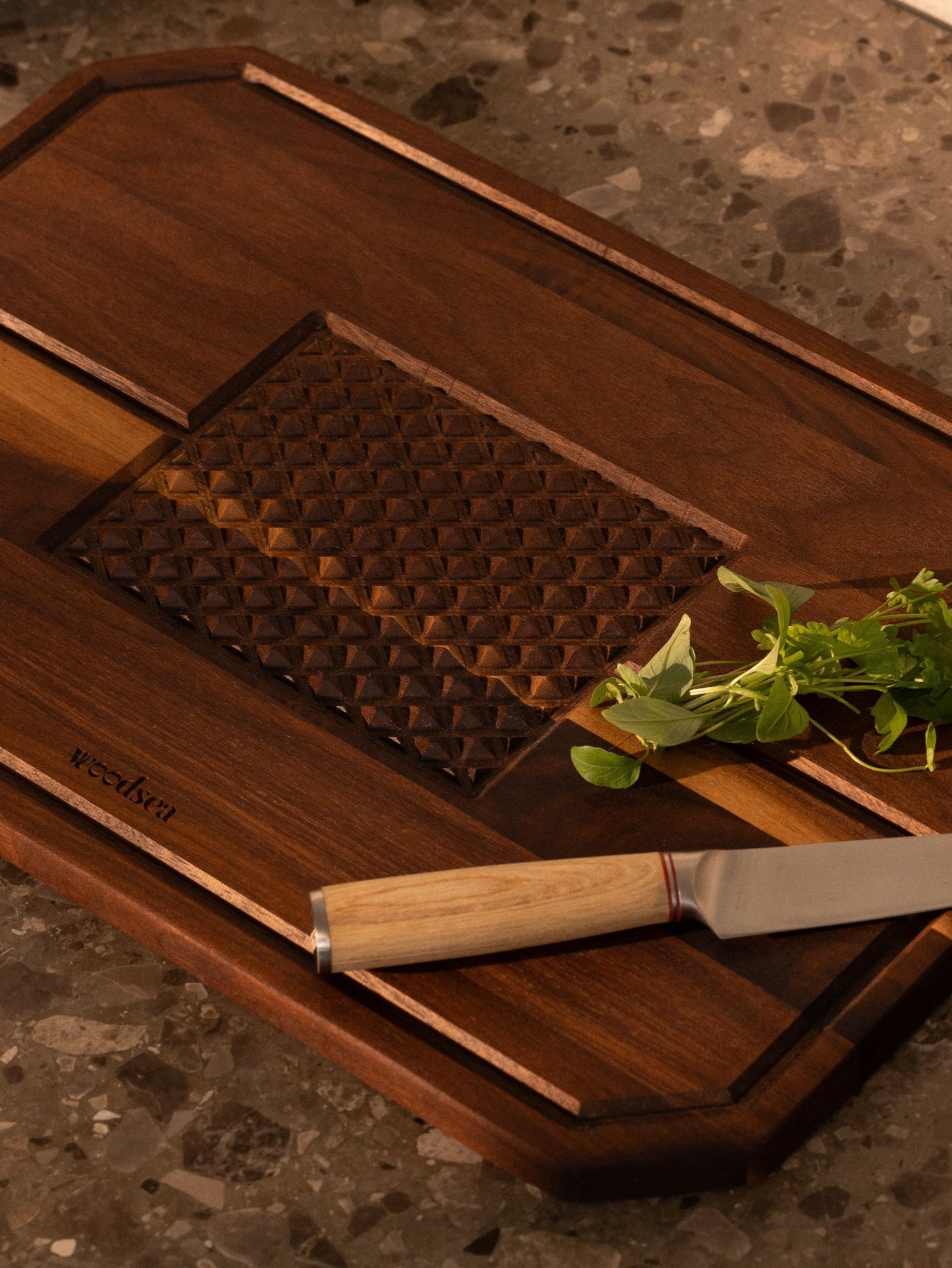
Wooden boards are loved for their warmth, durability, and natural beauty. Whether used for cutting, serving, or as a centerpiece on the table, they bring a sense of authenticity that no synthetic material can replace. But wood is a living material — and that means it reacts to how we use it.
Which means they react to moisture, temperature, and daily use. This is normal and expected. When cared for properly, a wooden board can last for many years. When cared for incorrectly, it may warp, crack, or lose its shape.
This guide explains why wooden boards warp, how often they should be oiled, how to clean them safely, and which common mistakes cause damage.
-------------------------------------------------
Quick Answers (At a Glance)
Why do wooden boards warp?
Wooden boards warp because wood absorbs moisture unevenly, causing one side to expand more than the other.
How often should you oil a wooden board?
New boards should be oiled once a week at first. After that, oil every 3–4 weeks or when the surface looks dry.
Can wooden boards go in the dishwasher?
No. Dishwashers expose wood to heat, water, and detergents that cause permanent damage.
--------------------------------------------------
Why Do Wooden Boards Warp or Rock?
Wooden boards warp when moisture is absorbed unevenly. Wood expands when wet and shrinks as it dries. If one side of the board is exposed to more water or heat than the other, the balance is lost and the board bends.
This usually happens when:
- only one side of the board is washed
- the board is left soaking in water
- the board dries standing upright
- the board is placed near heat or direct sunlight
In everyday use, most warping is caused by water imbalance, not by cutting or knife marks.
Mild warping may sometimes reduce if the board is dried flat and properly oiled. Strong warping is usually permanent, which is why prevention is the most important step.
How Often Should You Oil a Wooden Board?
Oiling protects wood by slowing down moisture absorption and preventing the surface from drying out. A well-oiled board is more resistant to warping, cracking, and stains.
For best results:
- Oil new boards once a week during the first month
- Oil regularly used boards every 3–4 weeks
- Oil immediately if the board looks pale or feels rough
Use a food-safe mineral oil or a natural board oil with wax. Apply a generous layer, allow it to soak in, and wipe off any excess. The surface should feel smooth and nourished, not oily.
Regular oiling is one of the most effective ways to extend the life of a wooden board.
Can Wooden Boards Be Washed in the Dishwasher?
Wooden boards should never be washed in a dishwasher.
Dishwashers combine prolonged heat, steam, strong detergents, and long exposure to water. This causes wood fibers to swell and shrink rapidly, which leads to warping, cracks, and loss of protective oils.
The correct way to clean a wooden board is
- hand wash with warm water
- use mild soap only when needed
- avoid soaking
- dry immediately with a towel
- let the board finish drying flat
These steps help maintain stable moisture levels in the wood.
Visual Guide: How to care for your wooden board
The visual guide above shows the most important wooden board care principles: gentle hand washing, avoiding dishwashers, regular oiling, flat drying, and protection from heat and direct sunlight.
These habits reduce moisture imbalance and help prevent warping, cracking, and surface damage over time.

|

|

|

|

|

|

|

|

|
A material worth respecting
Wooden boards are durable, but they are not maintenance-free. Small daily habits have a long-term impact on how the board looks and performs.
Proper care — balanced washing, regular oiling, and avoiding extreme conditions — allows wood to age naturally and remain stable for years.
At woodsea, we believe that caring for natural materials is not about perfection, but about consistency. When wood is treated with respect, it lasts longer and becomes more beautiful with time.